Last updated on November 11, 2025
If you’re dealing with cloudy water, gritty residue in your sinks, or sediment clogging your fixtures, you need a quality sediment filter for your well water system. Sediment filters are the first line of defense in protecting your home’s plumbing, appliances, and more advanced water treatment equipment from sand, silt, rust, and other particles.
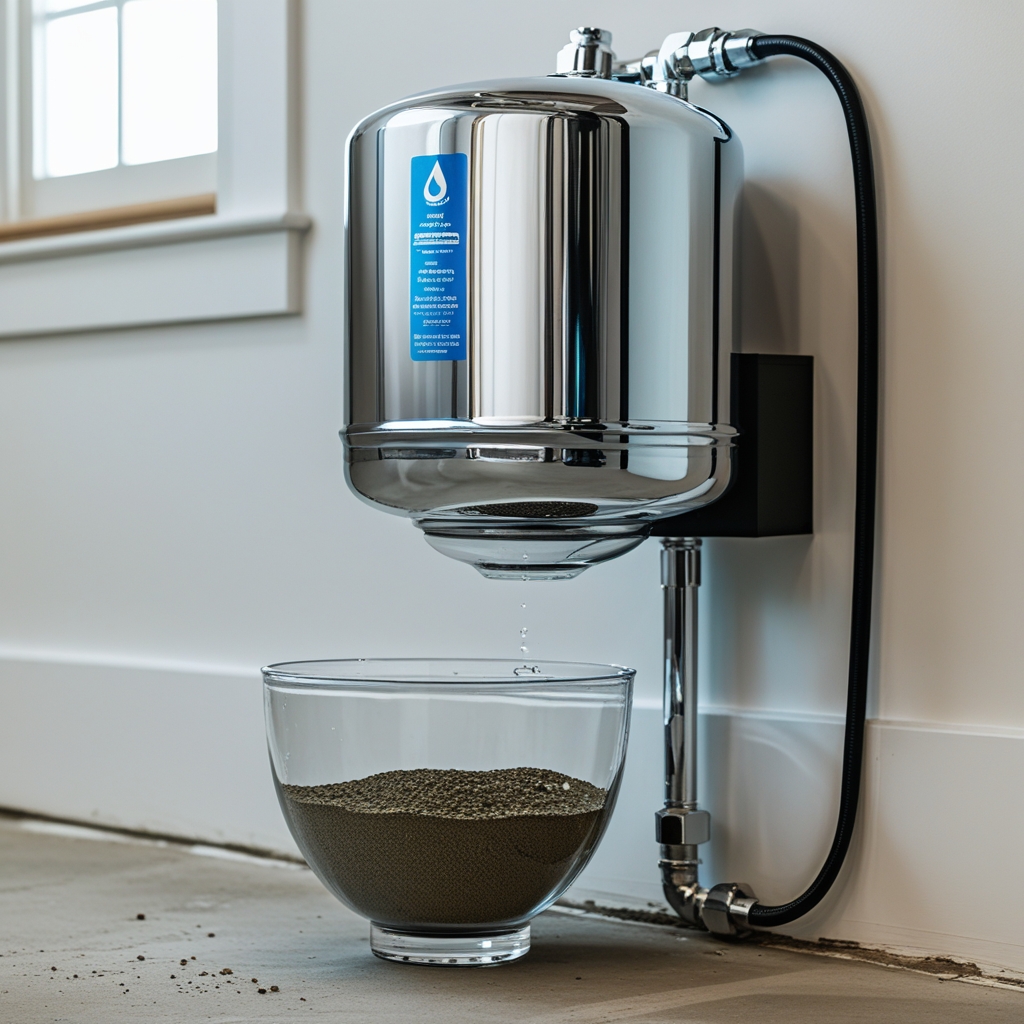
In this comprehensive guide, we’ll review the best sediment filters for well water, explain how to choose the right type for your needs, and help you determine the proper micron rating and capacity for your home.
Quick Comparison: Top Sediment Filters for Well Water
| Product | Type | Micron Rating | Flow Rate | Best |
| ForiSpring WSP-50 | Spin-Down | 50 micron | 15 GPM | Heavy sediment, reusable |
| Culligan WH-HD200-C | Whole House Cartridge | 5 micron | 8 GPM | Budget-friendly option |
| Pentair Whole House | Dual Cartridge | 5-10 micron | 20 GPM | Large homes, high flow |
| DuPont WFPF13003B | Single Cartridge | 5 micron | 15 GPM | Standard homes |
| Rusco Spin-Down | Spin-Down | 40 micron | 20 GPM | Commercial-grade durability |
| Tier1 Whole House | Triple Cartridge | 20-5-5 micron | 15 GPM | Multi-stage filtration |
| Watts Premier WH-LD | Cartridge System | 1 micron | 12 GPM | Fine sediment removal |
What is a Sediment Filter and Why Do You Need One?
A sediment filter is a mechanical filtration device that removes solid particles from your water supply. For well water systems, sediment filters are essential because:
Protection for Appliances: Sediment can damage water heaters, washing machines, dishwashers, and other appliances, significantly reducing their lifespan. Even small amounts of sand or silt can wear down seals, valves, and heating elements.
Pre-filtration for Other Systems: If you have a water softener, iron filter, UV purifier, or reverse osmosis system, sediment must be removed first. These advanced systems can be damaged or rendered ineffective by sediment buildup.
Clearer Water: Nobody wants cloudy water coming from their taps. Sediment filters provide noticeably clearer water throughout your home.
Reduced Maintenance: By catching sediment before it enters your plumbing system, you’ll spend less time cleaning aerators, replacing fixtures, and dealing with clogged pipes.
Extended Life of Fixtures: Faucets, showerheads, and toilet fill valves last longer when they’re not constantly being abraded by sediment particles.
Types of Sediment Filters for Well Water
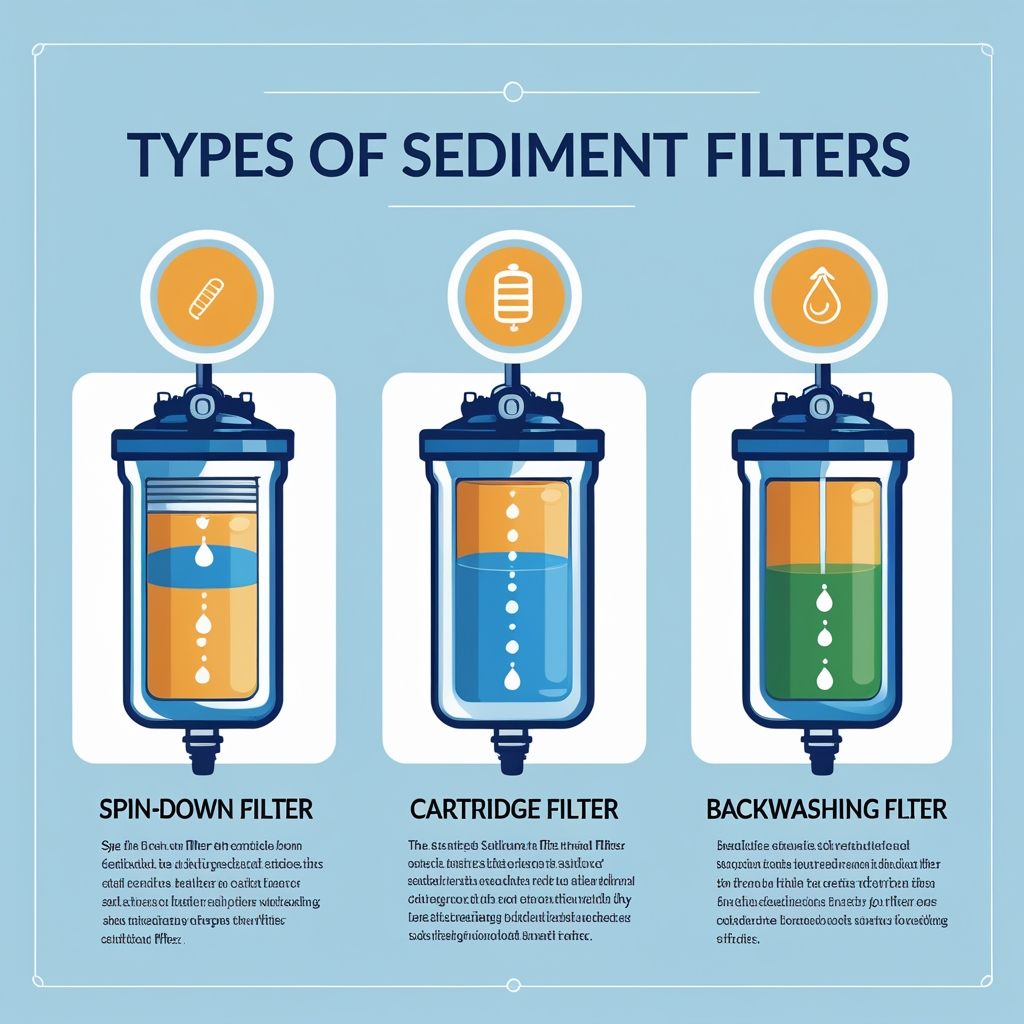
1. Spin-Down Filters (Centrifugal Separators)
Spin-down filters use centrifugal force to separate sediment from water. Water enters the filter housing tangentially, creating a spinning motion that forces heavier particles to the outer wall where they drop into a collection chamber at the bottom.
Advantages:
- Reusable – never need replacement cartridges
- Easy to clean by opening the drain valve
- Very low maintenance costs
- Excellent for heavy sediment loads
- No pressure drop over time
- Can handle large volumes of water
Disadvantages:
- Typically only filter down to 40-50 microns (coarse filtration)
- Require regular flushing of the collection chamber
- May need a cartridge filter downstream for finer filtration
- Higher initial cost than basic cartridge systems
Best For: Homes with heavy sediment problems, as a pre-filter before cartridge systems, or for well water with sand and larger particles.
2. Cartridge Filters
Cartridge filters use replaceable filter elements that trap sediment as water passes through. They’re the most common type of whole house sediment filter and come in various configurations.
Single-Stage Cartridge Filters: Simple housing with one filter cartridge. These are the most affordable option and work well for moderate sediment levels.
Dual-Stage Cartridge Filters: Two filter housings in series, typically using different micron ratings. For example, a 20-micron pre-filter followed by a 5-micron fine filter.
Triple-Stage Cartridge Filters: Three housings in series providing progressively finer filtration. These offer the most thorough sediment removal but require more space and maintenance.
Advantages:
- Available in many micron ratings (from 100 micron down to 1 micron)
- Relatively inexpensive upfront cost
- Easy to install and replace cartridges
- Compact design
- Effective for fine sediment removal
Disadvantages:
- Ongoing cartridge replacement costs
- Can clog quickly with heavy sediment
- Pressure drop as cartridges load with sediment
- Require periodic cartridge changes (every 2-6 months typically)
Best For: Homes with light to moderate sediment, as a second stage after a spin-down filter, or when fine filtration (5 microns or less) is needed.
3. Backwashing Sediment Filters
Backwashing filters use filter media (like sand or specialized filtration material) that can be automatically cleaned by reversing water flow. These are less common for residential use but excellent for properties with very high sediment loads.
Advantages:
- Very high capacity
- Automatic cleaning cycle
- Can handle heavy sediment loads indefinitely
- Low long-term maintenance
Disadvantages:
- Expensive initial cost
- Require electricity and a drain line
- Complex installation
- Need adequate water pressure and flow rate
- Waste water during backwash cycle
Best For: Properties with extremely high sediment, commercial applications, or homes where maintenance access is difficult.
Understanding Micron Ratings
The micron rating of a sediment filter indicates the size of particles it can remove. One micron equals 0.001 millimeters – about 1/25,000 of an inch.
Common Micron Ratings and What They Filter:
100 Microns:
- Removes coarse sand and large debris
- Used mainly for pre-filtration
- Won’t provide visibly clear water on its own
50 Microns:
- Typical rating for spin-down filters
- Removes most sand and grit
- Good for pre-filtration before finer filters
20-25 Microns:
- First stage in many multi-stage systems
- Removes fine sand and silt
- Noticeably improves water clarity
5-10 Microns:
- Standard for whole house cartridge filters
- Provides clear water for most applications
- Removes most visible sediment
1 Micron:
- Very fine filtration
- Removes clay, silt, and very fine particles
- Often used before UV systems or RO units
- Can clog quickly if used without pre-filtration
Choosing the Right Micron Rating:
For most well water applications, you’ll want a two-stage approach:
- Pre-filter: 20-50 micron spin-down or cartridge filter
- Fine filter: 5-10 micron cartridge filter
This combination prevents the fine filter from clogging too quickly while still providing excellent sediment removal.
Top Sediment Filters Reviewed
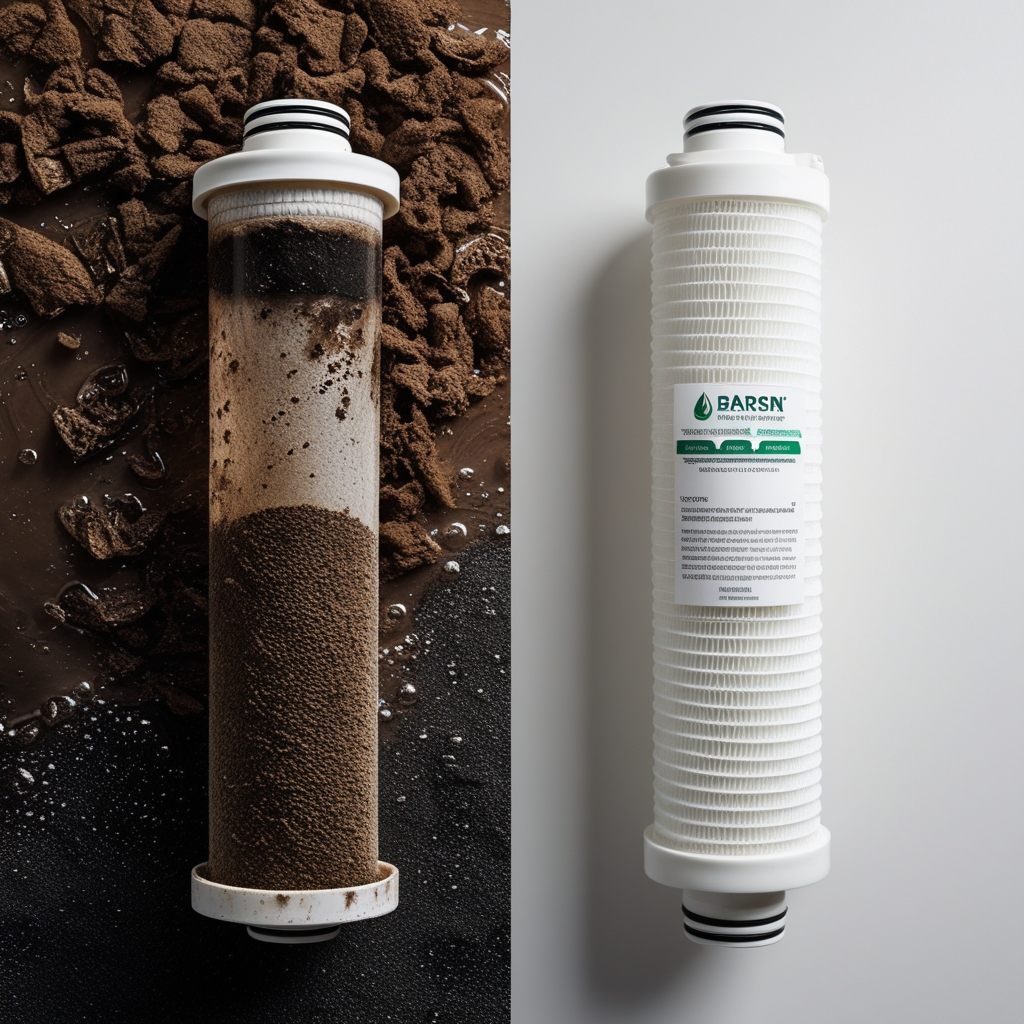
1. iSpring WSP-50 Spin-Down Sediment Filter
Micron Rating: 50 micron
Flow Rate: 15 GPM
Port Size: 3/4″ or 1″
Price Range: $$
The iSpring WSP-50 is our top pick for a reusable spin-down pre-filter. This filter excels at removing sand, silt, and scale from well water without the ongoing cost of replacement cartridges.
Key Features:
- Transparent housing allows you to see sediment buildup
- Easy-to-use flush valve for quick cleaning
- 100-micron stainless steel screen (50-micron version also available)
- Brass fittings resist corrosion
- Can be installed vertically or horizontally
Pros:
- Zero ongoing costs for cartridges
- Easy to maintain – just open the flush valve periodically
- Handles high sediment loads without losing pressure
- See-through bowl lets you monitor sediment levels
- Quality construction that lasts for years
Cons:
- 50-micron filtration means you’ll need a finer filter downstream
- Requires manual flushing (not automatic)
- Slightly more expensive initially than basic cartridge filters
Best For: Homeowners who want low maintenance costs and have moderate to heavy sediment in their well water. Works excellently as a pre-filter before a cartridge system.
2. Culligan WH-HD200-C Whole House Sediment Filter
Micron Rating: 5 micron
Flow Rate: 8 GPM
Port Size: 3/4″
Price Range: $
The Culligan WH-HD200-C offers excellent value for homeowners who need basic whole house sediment filtration on a budget. While it’s a simple single-cartridge system, it’s well-built and effective.
Key Features:
- Heavy-duty housing rated for high pressure
- Includes pressure relief button for easy cartridge changes
- 3/4″ brass ports
- Clear housing to monitor filter condition
- Compatible with standard 10″ x 4.5″ filter cartridges
Pros:
- Very affordable entry price
- Easy DIY installation
- Replacement cartridges are inexpensive and widely available
- Compact design fits in tight spaces
- Pressure relief feature makes cartridge changes easier
Cons:
- Only 8 GPM may be insufficient for larger homes
- Single-stage system provides limited filtration
- No bypass valve included
- Cartridges need frequent replacement with heavy sediment
Best For: Smaller homes (1-2 bathrooms) with light sediment issues, or as a budget-friendly option for renters who want to improve water quality.
3. Pentair Whole House Water Filter System
Micron Rating: 5-10 micron options
Flow Rate: 20 GPM
Port Size: 1″
Price Range: $$$
The Pentair whole house system is our premium pick for larger homes that need high flow rates and superior sediment removal. The dual-cartridge design extends filter life significantly compared to single-stage systems.
Key Features:
- Two large-capacity filter housings (10″ x 4.5″ cartridges)
- 1″ ports for maximum flow
- Can use different micron ratings in each stage
- Pressure gauge for monitoring
- Durable construction rated for high pressure
Pros:
- 20 GPM flow rate handles even the largest homes
- Dual-stage design means first cartridge catches bulk sediment
- Second stage provides final polishing filtration
- Pressure gauge helps you know when to change cartridges
- Large 1″ ports minimize pressure drop
Cons:
- Higher initial investment
- Requires more space for installation
- Need to replace two cartridges instead of one
- Heavier and more complex than single-stage units
Best For: Large homes (3+ bathrooms), properties with moderate sediment levels, or anyone wanting high flow rates with excellent filtration.
4. DuPont WFPF13003B Universal Whole House Filter
Micron Rating: 5 micron
Flow Rate: 15 GPM
Port Size: 3/4″
Price Range: $$
The DuPont WFPF13003B offers a nice middle ground between budget and premium options. It’s a single-cartridge system but uses high-quality components and provides excellent performance for standard-sized homes.
Key Features:
- Clear housing with pressure release
- Compatible with all standard 10″ cartridges
- 3/4″ brass connections
- Includes wall mounting bracket
- Pressure gauge port for monitoring
Pros:
- 15 GPM suitable for most 2-3 bathroom homes
- Excellent build quality from a trusted brand
- Easy to find replacement cartridges
- Clear housing for visual monitoring
- Good balance of price and performance
Cons:
- Single stage may require frequent changes with heavy sediment
- Standard 3/4″ ports may be a bottleneck for some systems
- No bypass valve included
Best For: Average-sized homes needing reliable sediment filtration with a trusted brand name and good performance.
5. Rusco Spin-Down Sediment Filter
Micron Rating: 40-200 micron options
Flow Rate: 20+ GPM
Port Size: 3/4″ to 2″
Price Range: $$$
The Rusco Spin-Down is a commercial-grade sediment filter that’s virtually indestructible. While expensive, it’s a one-time purchase that will outlast multiple cartridge systems.
Key Features:
- Stainless steel screen element
- Choice of micron ratings (40, 60, 80, 100, 200)
- Available in sizes from 3/4″ to 2″
- Clear polycarbonate bowl
- Manual flush valve
Pros:
- Extremely durable – often lasts 20+ years
- Zero ongoing cartridge costs
- Handles very high sediment loads
- Easy to clean – just open the flush valve
- Multiple sizes available for any home size
Cons:
- Highest upfront cost
- Only removes coarser sediment (40 microns minimum)
- Requires a finer filter downstream for best results
- Large size may not fit in tight spaces
Best For: Homes with heavy sediment problems, properties where maintenance is difficult or infrequent, or anyone wanting a lifetime solution with no ongoing costs.
6. Tier1 Whole House Triple-Stage Filtration System
Micron Rating: 20-5-5 micron (three stages)
Flow Rate: 15 GPM
Port Size: 1″
Price Range: $$$
The Tier1 triple-stage system provides the most thorough sediment removal of any cartridge-based system. It’s ideal for well water with variable sediment or when you want the clearest possible water.
Key Features:
- Three filter housings with progressive filtration
- 20 micron pre-filter, followed by two 5-micron filters
- Clear housings for all three stages
- 1″ brass ports for good flow
- Wall mounting bracket included
Pros:
- Most thorough sediment removal possible
- First stage protects subsequent filters
- Extended filter life due to staged filtration
- Excellent for protecting expensive downstream equipment
- Very clear water output
Cons:
- Expensive initial cost
- Three cartridges to replace
- Requires significant wall space
- May be overkill for light sediment issues
Best For: Well water with varying sediment levels, protecting expensive treatment equipment (UV, RO, etc.), or achieving the clearest possible water throughout your home.
7. Watts Premier Whole House Water Filter
Micron Rating: 1 micron
Flow Rate: 12 GPM
Port Size: 3/4″
Price Range: $$
The Watts Premier is designed for very fine sediment removal. Its 1-micron rating makes it ideal as a final polishing filter or when you need to remove extremely fine particles.
Key Features:
- Ultra-fine 1-micron filtration
- Large 10″ x 4.5″ cartridge for good capacity
- Clear housing with pressure relief
- Compatible with standard replacement cartridges
- Pressure gauge port
Pros:
- Removes even microscopic sediment particles
- Excellent for pre-filtration before UV or RO systems
- Produces extremely clear water
- Quality construction
- Standard cartridge size keeps replacement costs reasonable
Cons:
- 1-micron rating clogs quickly without pre-filtration
- Lower 12 GPM flow rate
- Should not be used as a first-stage filter
- More frequent cartridge changes than coarser filters
Best For: Use as a second or third stage after coarser sediment filters, protecting sensitive equipment like UV purifiers, or achieving ultra-clear water quality.
How to Choose the Right Sediment Filter
1. Assess Your Sediment Load
Run water into a clear glass and let it sit for a few minutes. If you see:
- Heavy sediment settling: Start with a spin-down filter (50+ micron)
- Visible cloudiness but little settling: A 20-micron pre-filter plus 5-micron fine filter
- Slight cloudiness: A single 5-10 micron cartridge filter may suffice
2. Determine Required Flow Rate
Count the bathrooms and major water-using appliances in your home:
- 1-2 bathrooms: 8-12 GPM sufficient
- 2-3 bathrooms: 12-15 GPM recommended
- 3-4 bathrooms: 15-20 GPM recommended
- 4+ bathrooms or high demand: 20+ GPM required
3. Consider Your Budget
Low Budget ($50-150): Single cartridge filter with 5-10 micron rating. Expect to replace cartridges every 2-4 months.
Medium Budget ($150-400): Spin-down pre-filter plus cartridge system, or dual-stage cartridge system. Better performance and lower long-term costs.
High Budget ($400-800): Commercial-grade spin-down plus multi-stage cartridge system. Maximum filtration with reasonable maintenance costs.
4. Think About Maintenance
How much time do you want to spend on filter maintenance?
- Minimal maintenance: Spin-down filters (just flush periodically)
- Moderate maintenance: Single cartridge (change every 2-6 months)
- Higher maintenance: Multi-stage cartridge systems (multiple filter changes)
5. Plan for Future Treatment
If you plan to add other treatment systems later (softener, UV, iron filter), install sediment filtration first. Your sediment filter choice should:
- Provide adequate flow rate for downstream equipment
- Filter to the micron level required by that equipment (check manufacturer specs)
- Have sufficient capacity to avoid frequent maintenance
Installation Tips
Location
Install your sediment filter:
- As close to where water enters your home as possible
- Before any other treatment equipment
- After your pressure tank (well systems)
- In a location that’s easily accessible for maintenance
- Where leaks won’t cause water damage
Additional Components
Consider adding:
- Bypass valve: Allows you to bypass the filter for maintenance
- Pressure gauge: Helps monitor when cartridges need changing
- Shutoff valves: On both sides of the filter for easier service
- Drain pan: Catches any leaks or spills during cartridge changes
Professional vs. DIY Installation
Most sediment filters can be installed by homeowners with basic plumbing skills. However, consider hiring a plumber if:
- You’re not comfortable working with your home’s plumbing
- Your water pipes are copper or galvanized steel (vs. PEX or CPVC)
- You need to add additional plumbing or relocate pipes
- Your local codes require licensed plumber for plumbing modifications
Maintenance and Cartridge Replacement
How Often to Change Filters
Cartridge lifespan depends on several factors:
- Sediment load in your water
- Water usage volume
- Micron rating (finer filters clog faster)
- Pre-filtration (if any)
Typical replacement schedules:
- Heavy sediment: Every 1-2 months
- Moderate sediment: Every 2-4 months
- Light sediment: Every 4-6 months
Signs Your Filter Needs Changing
- Reduced water pressure throughout the house
- Pressure gauge shows higher pressure before filter than after (if equipped)
- Filter cartridge appears heavily discolored or brown
- Return of sediment in water despite filter being in place
Changing Cartridges
- Shut off water supply
- Release pressure using pressure relief button (if equipped)
- Unscrew housing using filter wrench (usually provided)
- Remove old cartridge
- Clean housing thoroughly
- Check o-ring and lubricate with silicone grease
- Install new cartridge
- Reinstall housing (don’t overtighten)
- Turn water back on slowly
- Check for leaks
Cleaning Spin-Down Filters
- Close flush valve
- Turn off water supply briefly
- Open flush valve to release sediment
- Let water run for 30-60 seconds
- Close flush valve
- Resume normal operation
Flush spin-down filters weekly or when you notice sediment buildup in the clear bowl.
Common Problems and Solutions
Problem: Reduced Water Pressure
Possible Causes:
- Clogged filter cartridge
- Filter micron rating too fine for sediment load
- Insufficient flow rate capacity
Solutions:
- Replace cartridge
- Switch to coarser micron rating for pre-filter
- Upgrade to larger capacity filter with higher GPM rating
Problem: Cartridges Clog Too Quickly
Possible Causes:
- Heavy sediment in water
- No pre-filtration
- Filter micron rating too fine
Solutions:
- Add a spin-down pre-filter before cartridge system
- Use a coarser pre-filter cartridge (20-25 micron) before fine filter
- Consider a backwashing filter for very high sediment
Problem: Sediment Still Visible After Filtration
Possible Causes:
- Filter micron rating too coarse
- Channeling around filter cartridge
- Filter housing not sealing properly
Solutions:
- Use a finer micron rating (5 micron or less)
- Replace o-ring and ensure proper sealing
- Add a second stage fine filter
Problem: Leaking Filter Housing
Possible Causes:
- Damaged o-ring
- Housing overtightened or undertightened
- Cracked housing
Solutions:
- Replace o-ring and lubricate with silicone grease
- Tighten housing to proper torque (hand-tight plus 1/4 turn)
- Replace cracked housing
Sediment Filters vs. Other Water Treatment
Sediment Filter vs. Water Softener: Sediment filters remove solid particles. Water softeners remove dissolved minerals (calcium, magnesium). You need sediment filtration BEFORE a softener to protect the resin bed and control valve.
Sediment Filter vs. Carbon Filter: Sediment filters remove particles. Carbon filters remove chlorine, taste, odor, and some chemicals. Use sediment filtration before carbon filters to prevent carbon media from clogging.
Sediment Filter vs. Iron Filter: Sediment filters remove existing particles. Iron filters oxidize dissolved iron and remove it. If you have iron sediment (red water), a sediment filter alone won’t solve the problem – you need iron removal equipment.
Cost Analysis: Cartridge vs. Spin-Down Filters
Let’s compare the 5-year cost of ownership for different sediment filter types on a property with moderate sediment:
Single Cartridge Filter System:
- Initial cost: $100
- Cartridge replacements: $15 × 4 per year × 5 years = $300
- 5-year total: $400
Dual Cartridge Filter System:
- Initial cost: $250
- Cartridge replacements: $30 × 4 per year × 5 years = $600
- 5-year total: $850
Spin-Down Filter (50 micron) + Single Cartridge (5 micron):
- Initial cost: $300
- Cartridge replacements: $15 × 2 per year × 5 years = $150
- 5-year total: $450
Spin-Down Filter Only:
- Initial cost: $200
- Maintenance: $0 (just periodic flushing)
- 5-year total: $200
The spin-down filter has the lowest long-term cost, but only filters to 40-50 microns. For most homes, the best value is a spin-down pre-filter plus a single cartridge fine filter – this combination provides excellent filtration at reasonable long-term cost.
Recommended System Configurations
Basic System (Light Sediment, Small Home)
- Single 5-micron cartridge filter
- 8-12 GPM capacity
- Cost: $100-200
Standard System (Moderate Sediment, Average Home)
- 50-micron spin-down pre-filter
- 5-micron cartridge filter
- 15 GPM capacity
- Cost: $300-400
Premium System (Heavy Sediment, Large Home)
- 50-micron spin-down pre-filter
- 20-micron cartridge pre-filter
- 5-micron final cartridge filter
- 20 GPM capacity
- Cost: $500-700
Ultimate System (Very Heavy Sediment)
- Backwashing sediment filter (100 micron)
- 50-micron spin-down filter
- 5-micron cartridge filter
- 20+ GPM capacity
- Cost: $1,000-2,000
Frequently Asked Questions
Q: Do I need a sediment filter if my water looks clear?
A: Possibly. Even clear water can contain fine sediment that damages appliances and clogs other treatment equipment. If you have a water softener, UV system, or RO unit, sediment filtration is essential regardless of water appearance.
Q: What micron rating should I use?
A: For most well water, use a two-stage approach: 20-50 micron pre-filter followed by 5-micron fine filter. This prevents the fine filter from clogging too quickly.
Q: Can I use a sediment filter to remove iron?
A: Sediment filters can remove iron sediment (particles), but not dissolved iron. If you have clear water that turns red/orange when exposed to air, you need an iron removal system, not just sediment filtration.
Q: How do I know when to change my filter cartridge?
A: Watch for reduced water pressure, visible sediment in water, or discolored cartridges (if housing is clear). With a pressure gauge, replace cartridges when pressure drop exceeds 10-15 PSI.
Q: Will a sediment filter remove bacteria?
A: No. Sediment filters remove particles, not bacteria. For bacterial contamination, you need UV purification, chlorination, or other disinfection methods.
Q: Can I install a sediment filter myself?
A: Yes, if you’re comfortable with basic plumbing. Most systems use simple compression fittings or threaded connections. Always follow manufacturer instructions and local plumbing codes.
Conclusion
Sediment filtration is the foundation of any well water treatment system. Whether you choose a simple single-cartridge filter or a comprehensive multi-stage system depends on your specific sediment problems, budget, and maintenance preferences.
For most homeowners, we recommend starting with a reusable spin-down filter (like the iSpring WSP-50) as a pre-filter, followed by a 5-micron cartridge filter (like the DuPont or Pentair models) for final polishing. This combination provides excellent performance, reasonable costs, and minimal maintenance.
Remember that sediment filtration is just the first step. If you have iron, sulfur, hard water, or other issues, you’ll need additional treatment equipment – but sediment filtration should always come first to protect those more expensive systems.
By choosing the right sediment filter and maintaining it properly, you’ll enjoy clearer water, longer-lasting appliances, and better-performing water treatment equipment for years to come.
📢 Affiliate Disclosure
As an Amazon Associate I earn from qualifying purchases.
This article contains affiliate links to products we recommend. We may earn a commission from purchases made through these links at no additional cost to you.
We use advanced technology to scan thousands of products and their ratings. Our experts then combine this AI data to give you instant, top-rated recommendations you can trust.
⚠️ General Disclaimer
This article provides general information about well water systems and is not intended as professional advice. Well water systems vary significantly, and water quality issues can be complex.
For serious water quality concerns, system installations, or health-related issues, always consult with licensed professionals including well contractors, water treatment specialists, or healthcare providers as appropriate.