Last updated on November 13, 2025
Nothing ruins the comfort of your home faster than septic odors invading your living space. That unmistakable sewage smell can appear indoors, outdoors, or both—leaving you embarrassed, frustrated, and worried something’s seriously wrong with your system.

The good news? Most septic smells have straightforward causes and solutions. You don’t always need expensive repairs or emergency service calls. This guide walks you through identifying where the odor originates, what’s causing it, and exactly how to eliminate it for good.
Where Is the Smell Coming From?
Before you can fix a septic odor problem, you need to pinpoint its source. Different locations point to different issues.
Indoor Smells
Bathroom Odors: If you smell sewage in bathrooms, especially near sinks, showers, or toilets, the problem usually involves plumbing fixtures rather than the septic tank itself. Dry P-traps are the most common culprit—when water evaporates from these U-shaped pipe sections, sewer gases flow backward into your home.
Run water in every drain for 30 seconds. If the smell disappears, you’ve found your answer. Guest bathrooms and basement drains rarely used are particularly prone to this issue.
Kitchen Drain Smells: Kitchen sink odors that smell like sewage might actually be rotting food stuck in the disposal or drain. These organic smells can mimic septic odors. Pour boiling water mixed with baking soda down the drain. If it’s truly a septic issue, this won’t help—but if it’s food buildup, the smell will fade.
Laundry Room Issues: Washing machine drains can develop biofilm—a slimy bacterial coating that smells terrible. Front-loading washers are especially prone to mold and mildew growth around door seals. Clean the washer gasket with bleach solution and run a cleaning cycle with washing machine cleaner.
Whole House Odor: If every drain in your house smells like sewage, you likely have a genuine septic system problem. The main vent pipe might be blocked, preventing proper venting. Or your septic tank is full and backing up into your plumbing.
Outdoor Smells
Near the Septic Tank: Smells concentrated around your septic tank location usually mean the tank needs pumping, has a leak, or the lid seal is compromised. Walk around your tank area. If the ground feels spongy or you see standing water, you might have a leak requiring professional attention.
Around the Drain Field: Your drain field shouldn’t smell—ever. If you detect sewage odors in your yard where the drain field is located, the system is failing. Effluent is surfacing instead of filtering through soil. This requires immediate professional assessment.
Near Plumbing Vents: Every home has vent pipes extending through the roof. These release gases from your plumbing system. If vents are too short or positioned where air currents push gases down toward windows or outdoor living areas, you’ll smell them outside. Wind patterns matter here—you might only notice the smell on certain days.
Throughout Your Property: If your entire yard smells like sewage but you can’t pinpoint a specific location, neighboring properties might be the source. Septic problems don’t respect property lines. A friendly conversation with neighbors might reveal they’re dealing with issues too.
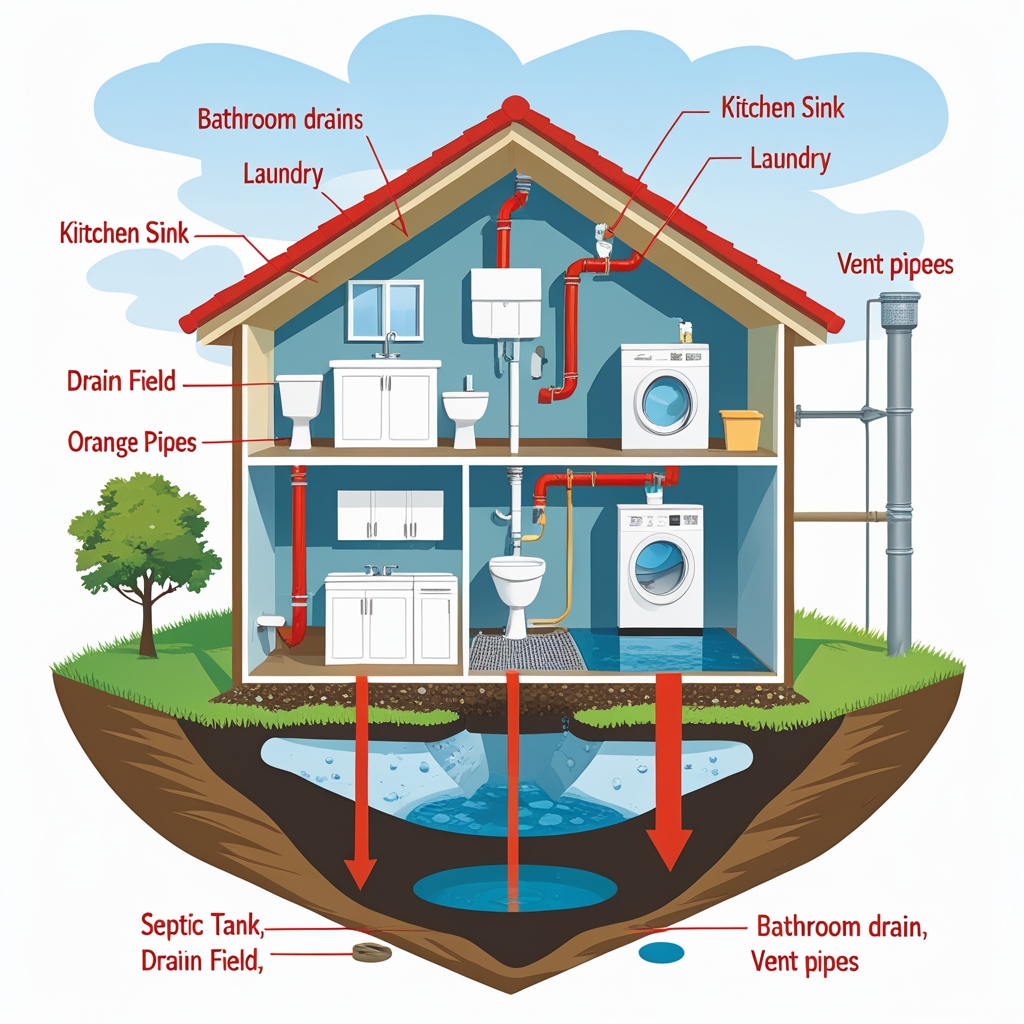
Common Causes of Septic Odors
1. Full Septic Tank (Most Common Cause)
Your septic tank accumulates solid waste over time. When solids fill too much of the tank, the system can’t separate liquids properly. Gases build up and escape through any opening—vents, drains, even through the ground.
How to Identify:
- You haven’t pumped the tank in 3+ years
- Drains are slower than usual
- Toilets don’t flush as powerfully
- Gurgling sounds from drains
- Strong smell near the tank location
Solution: Schedule pumping immediately. Most households need pumping every 3-5 years, but larger families or smaller tanks require more frequent service. This is the single most common cause of septic odors and the easiest to fix.
Cost: $300-600 for pumping
2. Blocked or Damaged Vent Pipes
Your plumbing system includes vent pipes that extend through your roof, allowing sewer gases to escape safely away from living areas. When vents become blocked by leaves, bird nests, ice, or debris, gases can’t exit properly. Pressure builds and pushes odors back through drains.
How to Identify:
- Smell is worse when using water
- Gurgling from drains
- Slow drains throughout the house
- Smell comes and goes
Solution: Inspect your roof vents. Look for visible blockages. A plumber can use a specialized camera to check vents or clear them with a plumbing snake. Sometimes extending the vent pipe an extra foot or two eliminates downdraft issues.
Cost: $150-400 for professional vent clearing
3. Dry P-Traps in Unused Drains
Every drain in your home has a P-trap—that U-shaped pipe section that holds water to block sewer gases. When drains go unused for weeks, water evaporates, eliminating this gas barrier.
How to Identify:
- Guest bathroom smells but isn’t used often
- Basement floor drain hasn’t seen water in months
- Only certain drains smell
- Running water temporarily fixes it
Solution: Pour a gallon of water down every drain in your house monthly. For drains rarely used, add a small amount of mineral oil to the P-trap after filling it. Oil floats on water and prevents evaporation for months.
Cost: Free
4. Damaged or Leaking Septic Tank
Cracks in concrete septic tanks or failed seals around access lids let odors escape directly from the tank. Groundwater can also enter the tank through cracks, filling it faster than normal and causing overflow issues.
How to Identify:
- Strong smell concentrated near tank
- Wet, soggy ground above the tank
- Lush, extra-green grass over the tank
- Recent ground settling or shifting
- Tank is older (25+ years for concrete)
Solution: Professional inspection to assess damage. Small cracks might be sealable; extensive damage requires tank replacement. Lid seals are easily replaceable—make sure lids sit flush and gaskets aren’t deteriorated.
Cost: $100-300 for lid replacement; $3,000-8,000 for tank replacement
5. Failing Drain Field
When your drain field fails, it can no longer properly filter and absorb wastewater. Sewage surfaces in your yard, creating obvious and overwhelming odors. This is the most serious septic problem.
How to Identify:
- Sewage smell in yard over drain field area
- Wet, muddy patches where drain field is located
- Sewage backup in house during heavy water use
- Extra-green grass over drain field
- Standing water or sewage visible on surface
Solution: This requires professional assessment. Depending on the cause and severity, solutions range from drain field restoration ($3,000-7,000) to complete replacement ($5,000-15,000). Sometimes excessive water use, a full tank, or using wrong products damaged the field—correcting these behaviors might restore function.
Cost: $3,000-15,000 depending on repair type
6. Excessive Organic Loading
When too much organic waste enters your septic system rapidly, bacteria can’t keep up with decomposition. Anaerobic digestion produces hydrogen sulfide gas—that rotten egg smell—in excessive amounts.
How to Identify:
- Strong sulfur/rotten egg smell
- Odor intensifies after heavy waste disposal
- Garbage disposal gets heavy use
- Large family or frequent guests
Solution: Reduce organic waste going down drains. Scrape plates into trash before washing. Limit garbage disposal use. Add biological additives specifically designed for septic systems to boost bacterial activity. Spread out laundry loads throughout the week instead of doing them all at once.
Cost: $20-50 for biological additives
7. Temperature and Weather Changes
Cold weather slows bacterial activity in your septic tank, reducing decomposition efficiency. This causes odors to build up. Hot weather accelerates decomposition, creating more gases. Barometric pressure changes can push odors out of vents more noticeably.
How to Identify:
- Smell appears seasonally
- Worse during temperature extremes
- Occurs during specific weather patterns
- Tank otherwise functions normally
Solution: Ensure adequate venting. Consider installing a carbon filter vent cap that neutralizes odors before they escape. Maintain bacterial health with specialized cold-weather additives if you live in freezing climates.
Cost: $50-150 for vent filters; $30-60 for seasonal additives
8. Wrong Products Flushed Down Drains
Antibacterial cleaners, bleach, harsh chemicals, and even certain “septic-safe” products can kill beneficial bacteria in your tank. Without these bacteria, waste doesn’t break down properly, causing odors and system failure.
How to Identify:
- Started using new cleaning products
- Recently took antibiotics (yes, this affects septic systems)
- Smell developed after intensive house cleaning
- Used drain cleaners or clog removers
Solution: Stop using antibacterial products. Switch to genuinely septic-safe cleaners. Add bacterial additives to repopulate your tank with healthy bacteria. It can take several weeks for the bacterial colony to recover.
Cost: $15-40 for bacterial treatments

Room-by-Room Solutions
Bathroom Fixes
For Toilets: If your toilet constantly smells like sewage, check the wax ring seal. This ring sits between the toilet and the drain pipe. When it fails, sewer gases leak into the bathroom. You’ll also notice slight rocking when you sit on the toilet.
Replacing a wax ring requires removing the toilet—an afternoon DIY project if you’re handy, or a $150-250 plumber call. While the toilet is off, inspect the flange (the pipe fitting the toilet attaches to). Damaged flanges also let odors escape.
For Showers and Tubs: Hair and soap scum create biofilm in drain pipes, producing foul odors. This isn’t technically a septic odor, but it smells similar enough to cause concern.
Remove the drain cover. Use a drain snake or zip-it tool to pull out accumulated hair and gunk. Pour baking soda followed by white vinegar down the drain. Let it fizz for 30 minutes, then flush with hot water. Monthly maintenance prevents buildup.
For Sinks: Bathroom sinks often smell due to toothpaste, hair, and soap creating a paste-like coating inside the pipe. Remove the drain stopper and clean it thoroughly. Run very hot water for several minutes.
If the P-trap is accessible under the sink, place a bucket beneath it, unscrew the trap, clean it out, and reassemble. This eliminates all organic buildup that creates odors.
Kitchen Solutions
Garbage Disposal Odors: Food particles stuck in the disposal rot and smell terrible. To clean: with the disposal off, pour baking soda into the drain. Add white vinegar and let it fizz. After 10 minutes, run cold water and turn on the disposal.
For deeper cleaning, freeze vinegar in ice cube trays. Run these ice cubes through the disposal with cold water. The ice sharpens blades while vinegar cleans. Citrus peels add a fresh scent.
Dishwasher Drain Issues: Dishwashers connect to your drain system. A clogged or dirty drain hose can smell terrible. Check the filter at the bottom of your dishwasher—clean it monthly. Run an empty cycle with dishwasher cleaner or white vinegar.
If your dishwasher drains slowly or smells persist, the drain hose might need cleaning or replacement. This often involves pulling the dishwasher out to access connections.
Laundry Room Remedies
Washing Machine Smells: Front-load washers develop mold around door gaskets and in the drum. After every wash, leave the door open for several hours to air dry. Monthly, run a cleaning cycle with washing machine cleaner or two cups of white vinegar.
Wipe the door gasket with a bleach solution (1/4 cup bleach to 1 gallon water). Check the drain filter—most people don’t know washers have one. It’s usually behind a small panel at the front bottom. Clean it monthly.
Floor Drain Odors: Laundry rooms often have floor drains that never get used. Pour water down them monthly. If they still smell, the trap might be damaged or incorrectly installed. A plumber can assess and fix this.
Outdoor Odor Solutions
Tank Area Treatments
Immediate Actions: Walk around your septic tank area. Look for:
- Sunken ground (indicates tank or pipe collapse)
- Extra-green grass (sewage is fertilizing it)
- Wet areas (leaking tank or pipes)
- Visible effluent (emergency situation)
If you find any of these, call a septic professional immediately. These indicate serious problems beyond DIY fixes.
Tank Lid Seal Repair: Septic tank lids should seal completely. If you can see gaps or the rubber gasket looks deteriorated, replace it. Hardware stores sell replacement gaskets. Make sure lids are flush with the tank—sometimes they settle unevenly and don’t seal properly.
For about $100, you can install locking, sealed risers that bring access ports to ground level. These eliminate odor leaks and make future pumping easier.
Drain Field Protection
Your drain field needs protection, not treatment. Never:
- Drive vehicles over the drain field
- Plant trees or deep-rooted shrubs nearby
- Add soil or structures on top
- Allow surface water to saturate the area
Keep the area grassed with shallow-rooted plants. Don’t over-water or fertilize excessively. Route gutters and drainage away from the drain field.
If your drain field already smells, professional help is needed. However, reducing water usage by 30-50% for several weeks sometimes allows a temporarily overloaded field to recover. Fix leaky faucets, take shorter showers, spread out laundry loads.
Vent Pipe Modifications
If outdoor odors trace back to roof vents releasing gases near windows or outdoor living areas, you have options:
Extend Vent Pipes: Adding 2-3 feet of pipe height carries odors higher where wind disperses them better. This is a simple plumbing modification.
Install Carbon Filter Vent Caps: These special caps contain activated carbon that neutralizes odors before gases escape. They fit over existing vent pipes and last 1-2 years before needing replacement.
Add Multiple Vents: Sometimes a single vent can’t adequately release gases. A plumber can add secondary vents to improve air flow through your plumbing system.
Long-Term Prevention Strategies
Establish a Maintenance Schedule
Monthly:
- Run water through all drains
- Clean garbage disposal
- Check for plumbing leaks
- Inspect visible septic components
Quarterly:
- Deep-clean washing machine
- Check vent pipes (if accessible)
- Assess yard for wet spots
- Review household water usage
Annually:
- Professional septic inspection
- Pump tank if needed (at least every 3-5 years)
- Test all P-traps and seals
- Replace vent filters if installed
Use Septic-Appropriate Products
Switch to:
- Septic-safe toilet paper (breaks down faster)
- Biodegradable soaps and detergents
- Natural cleaning products
- Enzyme-based drain cleaners
Avoid:
- Antibacterial soaps and cleaners
- Bleach (or use very sparingly)
- Harsh drain cleaners
- Chemical toilet bowl cleaners
- Fabric softener sheets (use liquid)
Control What Goes Down Drains
Never Flush:
- Wipes (even “flushable” ones)
- Feminine products
- Dental floss
- Cotton swabs
- Medications
- Grease or cooking oil
- Coffee grounds
- Eggshells
- Produce stickers
- Cat litter
Garbage Disposal Rules: Use sparingly. Scrape plates into the trash. Only small amounts of soft foods should go down the disposal. Never grind fibrous vegetables, potato peels, or bones.
Manage Water Usage
Septic systems need time to process waste. Overwhelming the system with too much water at once causes problems.
Smart Water Habits:
- Spread laundry throughout the week
- Take shorter showers
- Fix leaky toilets and faucets immediately
- Install low-flow fixtures
- Don’t fill hot tub or pool by draining to septic
- Route water softener backwash away from septic (if possible)
Boost Bacterial Health
Your septic tank relies on billions of bacteria to break down waste. Support them:
Monthly Treatments: Some homeowners use biological additives. While experts debate their necessity for healthy systems, they can help if your tank struggles with odors or slow decomposition.
Look for products containing natural bacteria and enzymes specifically for septic systems. Avoid chemical additives that claim to “clean” your tank—these often damage bacterial colonies.
Yeast Myth: You may hear that flushing baker’s yeast feeds septic bacteria. This doesn’t harm anything, but it doesn’t help either. Septic bacteria are specialized species; baker’s yeast won’t survive in that environment.
When to Call a Professional
DIY Limits
You can handle many odor issues yourself—dry P-traps, cleaning drains, adjusting your habits. But some situations require professional expertise.
Call Immediately If:
- Sewage backs up into your house
- Multiple drains won’t clear
- Sewage surfaces in your yard
- You see or smell sewage near the tank
- Ground is sinking around septic components
- Tree roots have invaded pipes
- You haven’t pumped your tank in 5+ years
Schedule Professional Service If:
- Odors persist after trying DIY solutions
- You’re not sure where the smell originates
- Vent issues require roof work
- Drain field shows any signs of failure
- Tank is due for pumping
- You want an inspection before problems develop
Choosing a Septic Professional
Look for:
- Proper licensing and insurance
- Established local business
- Good online reviews
- Membership in professional associations
- Willingness to explain issues clearly
- Upfront pricing
Get Multiple Quotes: For major repairs, get at least three estimates. Septic work varies significantly in cost between providers. Make sure you’re comparing equivalent services.
Ask Questions:
- What’s causing this specific odor?
- What are my repair options?
- Can this be prevented in the future?
- What’s the expected lifespan of this repair?
- Do you offer maintenance plans?
Special Situations
Cold Weather Odors
Freezing temperatures slow bacterial activity in your septic tank. Decomposition slows, causing waste and gases to accumulate. You might notice odors worsen in winter.
Winter Solutions:
- Reduce water usage slightly
- Spread out hot water use throughout the day
- Consider insulating blanket over tank (if accessible)
- Use cold-weather bacterial additives
- Ensure snow doesn’t block vents
After Heavy Rain
Excessive water infiltrating your septic system dilutes bacteria and interferes with proper settling. If your tank or drain field leaks, rainwater gets in. Surface water should never enter septic components.
Post-Rain Actions:
- Reduce water usage for several days
- Check for standing water near septic areas
- Improve yard drainage around septic components
- Have tank inspected for cracks or failed seals
New Construction Nearby
If neighbors recently built new homes or made major landscape changes, their activities might affect groundwater flow, impacting your drain field performance. Heavy construction equipment can compact soil, changing drainage patterns.
Document any changes you notice. If your previously problem-free system suddenly smells after neighbor activities, professional assessment might reveal impacts.
Cost Summary
DIY Solutions:
- Running water through drains: Free
- Baking soda and vinegar cleaning: $5
- Enzyme drain cleaners: $10-20
- Bacterial additives: $20-50
- Vent filters: $50-150
Professional Services:
- Septic pumping: $300-600
- Plumbing vent clearing: $150-400
- Wax ring replacement: $150-250
- Tank inspection: $100-300
- Minor repairs: $200-1,000
Major Repairs:
- Tank replacement: $3,000-8,000
- Drain field restoration: $3,000-7,000
- New drain field: $5,000-15,000
Prevention through regular maintenance costs far less than emergency repairs.
Frequently Asked Questions
Q: Is it normal for septic systems to smell sometimes?
A: No. A properly functioning septic system should never produce noticeable odors inside your home. Slight outdoor smells during tank pumping are normal, but persistent odors indicate a problem needing attention.
Q: Can septic odors make you sick?
A: Prolonged exposure to hydrogen sulfide (the rotten egg smell) can cause headaches, dizziness, and nausea. If odors are strong or constant, address the problem immediately and consider staying elsewhere until resolved.
Q: Will rain make septic smells worse?
A: Yes, often. Rain saturates soil, preventing gases from dispersing normally. Barometric pressure changes with weather also affect how gases escape your system. If smells only appear during rain, your system might be fine—it’s just weather-related.
Q: Should I pour chemicals down my drains to stop odors?
A: No. Chemical drain cleaners and antibacterial products kill beneficial septic bacteria, making problems worse long-term. Use enzyme-based cleaners and biological treatments designed for septic systems.
Q: My neighbor’s septic tank smells. Can I do anything?
A: You can politely mention you’ve noticed odors and ask if they’ve had their system checked recently. If they’re unwilling to address it and odors affect your property enjoyment, contact your local health department. Septic failures can be public health hazards.
Q: Does bleach damage septic systems?
A: Small amounts used for normal household cleaning won’t harm a healthy septic system. However, excessive bleach kills beneficial bacteria. Use bleach sparingly and choose less harsh alternatives when possible.
Final Thoughts
Septic odors aren’t just unpleasant—they’re warnings that something needs attention. The good news is most causes have straightforward solutions. Start with the simplest fixes: run water through drains, schedule overdue pumping, and check for obvious leaks or damage.
If DIY approaches don’t eliminate odors within a week or two, bring in professionals. Ignoring septic smells never makes them go away; problems only worsen and become more expensive to fix.
Your septic system is a significant investment in your property. Regular maintenance and prompt attention to issues like odors ensure it continues working efficiently for decades. A little prevention and quick action when problems arise saves thousands in repairs and keeps your home comfortable and odor-free.
📢 Affiliate Disclosure
As an Amazon Associate I earn from qualifying purchases.
This article contains affiliate links to products we recommend. We may earn a commission from purchases made through these links at no additional cost to you.
We use advanced technology to scan thousands of products and their ratings. Our experts then combine this AI data to give you instant, top-rated recommendations you can trust.
⚠️ General Disclaimer
This article provides general information about well water systems and is not intended as professional advice. Well water systems vary significantly, and water quality issues can be complex.
For serious water quality concerns, system installations, or health-related issues, always consult with licensed professionals including well contractors, water treatment specialists, or healthcare providers as appropriate.